
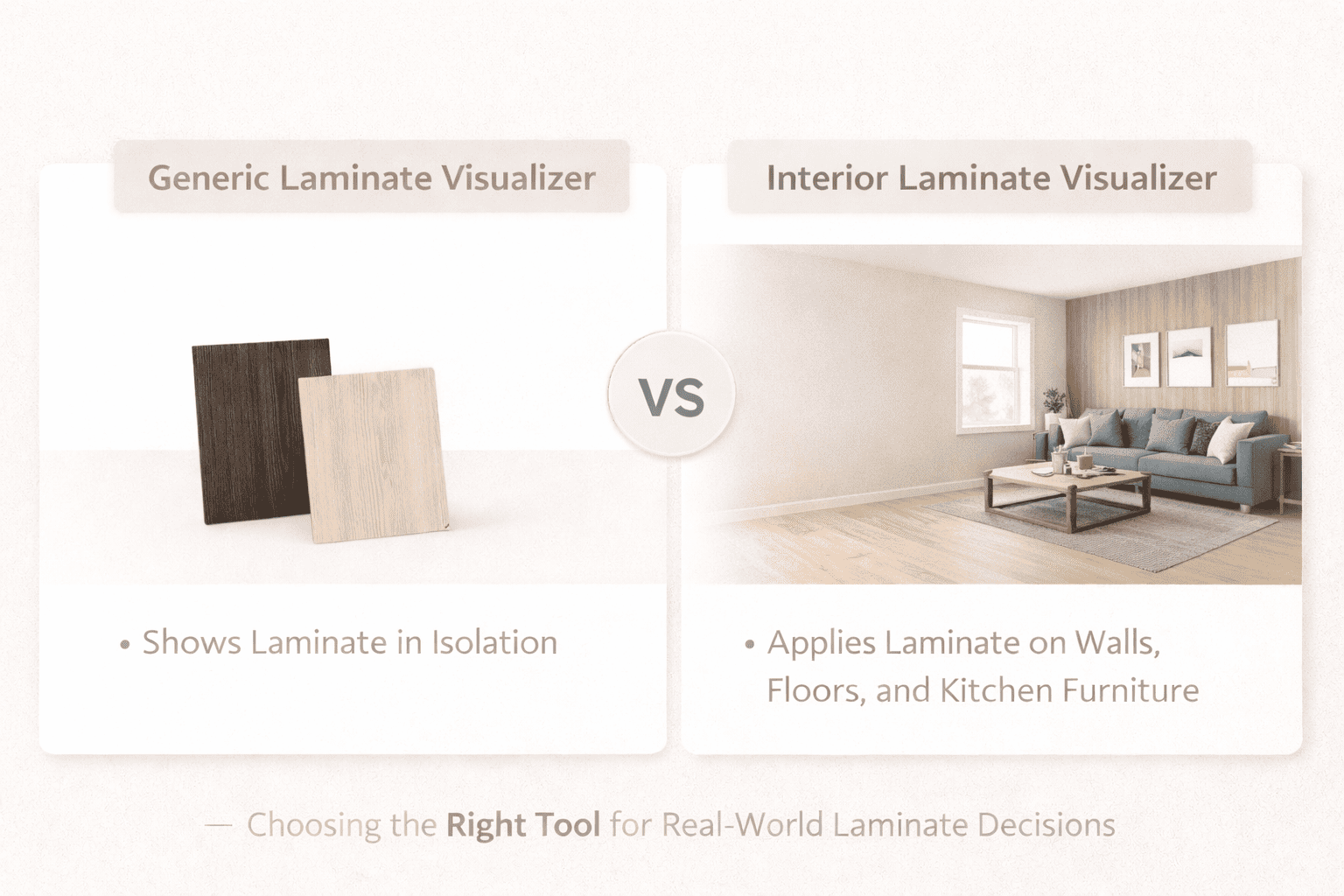
Not all visualization software is built for the same purpose. While generic product visualizers are designed to display products in isolation, interior visualization software focuses on how materials behave within real spaces. For laminate and furniture businesses, this distinction is critical.
Understanding the difference helps businesses choose technology that actually supports real-world interior decisions.
What Generic Product Visualizers Are Designed For
Generic product visualizers are typically created to showcase products individually. They work well for items like electronics, apparel, or small consumer goods where context is less important.
These tools focus on:
- Rotating a product
- Changing colors on a single object
- Highlighting surface details
While visually appealing, they often lack the depth needed for interior materials that must work within a broader design environment.
Why Interiors Need Context, Not Isolation
Laminates are rarely used alone. They are applied to wardrobes, cabinets, furniture panels, doors, and walls always surrounded by other elements like lighting, wall colors, and décor.
Interior visualization software is built to show context. It allows users to see how a laminate interacts with:
- Room lighting
- Adjacent materials
- Furniture proportions
- Overall interior layout
This context is what turns a preview into a reliable decision-making tool.
Surface Behavior Is Different in Interiors
In interiors, the same laminate can look very different depending on where it is applied. Vertical panels, horizontal surfaces, and large shutters reflect light differently and reveal textures in unique ways.
Interior-focused visualization software accounts for:
- Surface orientation
- Scale and repetition of textures
- Visual weight across large areas
Generic product visualizers often miss these details, leading to misleading previews.
Furniture Visualization Requires Specialized Mapping
Furniture surfaces are not flat canvases. They include joints, shutters, edges, and modular sections. Interior visualization software uses specialized surface mapping to ensure laminates align correctly across these components.
This results in previews that feel realistic and usable, especially for wardrobes, kitchen cabinets, TV units, and office furniture.
Decision-Making vs Display: A Key Difference
Generic visualizers are designed primarily for display. Interior visualization software is designed for decision-making.
Interior tools help users:
- Compare multiple finishes in the same space
- Evaluate balance and contrast
- Finalize choices with confidence
This makes them more suitable for businesses where wrong decisions are costly.
Workflow Alignment for Interior Businesses
Interior visualization software fits naturally into business workflows. It supports:
- Sales discussions
- Design approvals
- Showroom presentations
- Digital catalogues
Generic product visualizers often remain limited to marketing use, while interior visualization becomes part of daily operations.
Why Interior-Specific Software Scales Better
As laminate collections grow and applications expand, interior visualization software scales by supporting multiple room types, furniture categories, and use cases.
This flexibility allows businesses to grow without changing tools, making the technology a long-term asset rather than a temporary solution.
How Lamisel Fits the Interior Visualization Category
Lamisel is built specifically for interior and furniture laminate visualization. It focuses on how laminates are used in real spaces rather than how they look as isolated products.
This interior-first approach ensures that visual previews are practical, accurate, and aligned with real business needs.
Explore More
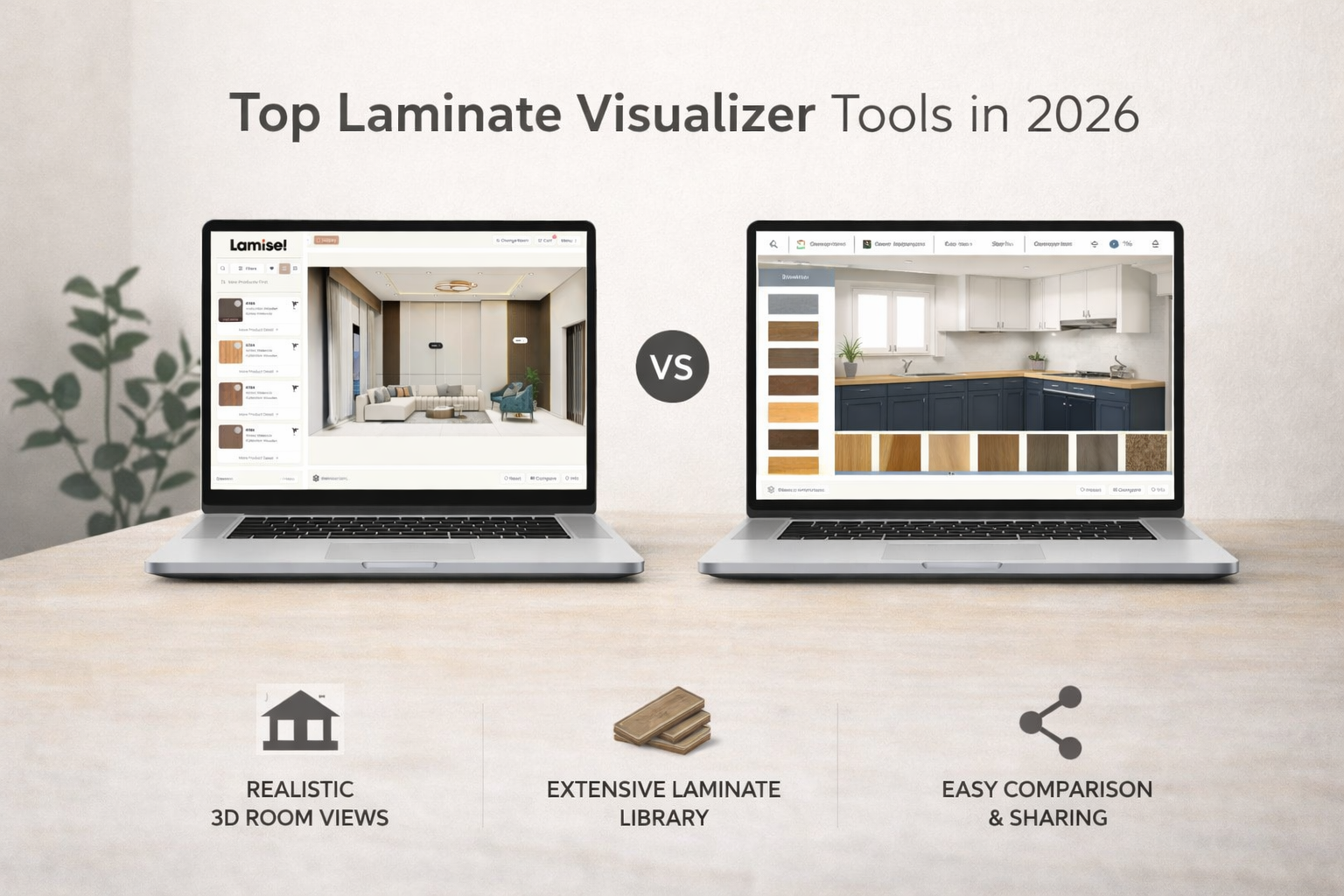
Top Laminate Visualizer Tools in 2026
Explore the top laminate visualiser tools in 2026 and compare their features, performance, and AI ca...
Read More
The Future of Laminate Visualization: AI, Automation, and Digital Decision-Making
The laminate industry is no longer limited to physical showrooms and in-person meetings. Customers t...
Read More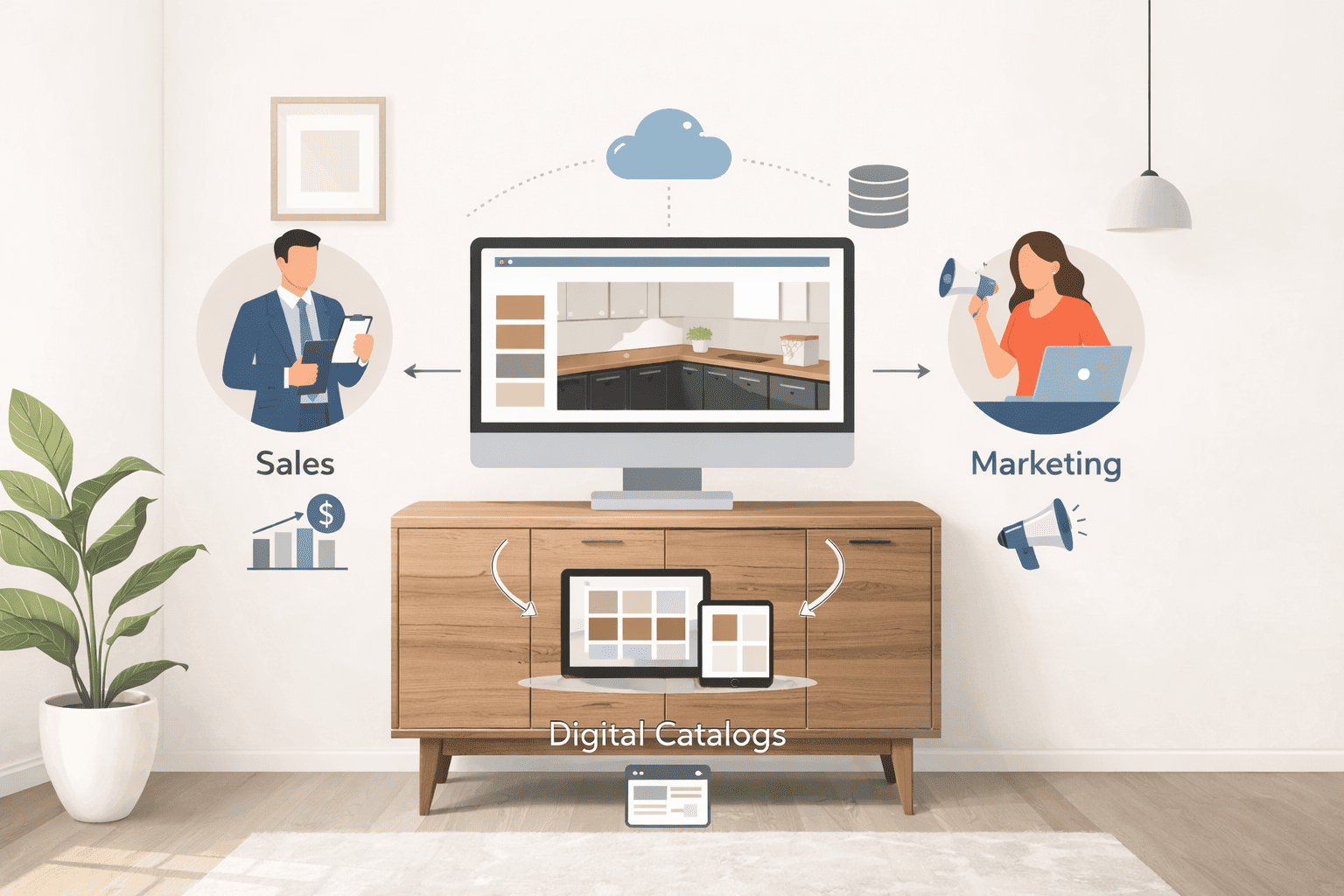
How Laminate Visualization Software Integrates with Sales, Marketing, and Digital Catalogues
The laminate and interior industry is entering a new phase where technology is not just supporting d...
Read More